
What is the Average Cost of a 10-Page Website? (2026)
You start researching website pricing, thinking you’ll get a quick answer. One article says websites should cost next to nothing. Another throws around vague “custom quote” language without actually explaining anything. Meanwhile, every platform promises it’s the easiest, cheapest, best option. Cue the spiral.
So, how much does a website cost? This guide covers the average cost of a 10-page website in 2026, what drives that pricing, and how to choose the right investment based on what your website needs to accomplish, not on whoever gave the loudest online opinion.
Why Website Pricing Is So Confusing
Website pricing gets confusing because two businesses asking for a “10-page website” often need completely different things. Platform, customization, copywriting, functionality, strategy, and support all shape the final investment.
One business needs a simple DIY template with basic copy and stock photos. Another needs a strategic, professionally designed site with custom branding, conversion-focused copy, SEO structure, mobile optimization, and booking integrations.
But let’s be honest, vague answers like “it depends” don’t help when you’re trying to understand what to invest in your website. So let’s break it down.
What Counts as a 10-Page Website?
A 10-page website usually includes core pages like: Home, About, Service Pages, Contact, FAQ, Blog, and Portfolio pages. But page count only tells part of the story, and complexity changes pricing fast.
That’s why professional website pricing depends more on scope than simple page count. Functionality, strategy, customization, copywriting, integrations, and user experience all shape the final investment.
What a 10-Page Website Really Costs in 2026
A 10-page website’s costs fluctuate depending on the amount of strategy, structure, and support you put behind it.
The Real Cost of a DIY Website
If you build the site yourself using Squarespace, Wix, or WordPress templates, you’ll likely spend anywhere from a few hundred dollars to around $2,000 upfront. That cost covers things like subscriptions, templates, domain fees, plugins, and maybe some stock photography.
The tradeoff? Time, energy, and sometimes the final result. DIY websites cost less upfront, but they demand hours of decisions, troubleshooting, and redesigning.
And after all that work, you could still end up with a site that doesn’t look polished, guide visitors clearly, or convert the way your business needs it to.
What a Professional Website Costs
For most service-based businesses, hiring a professional designer, a 10-page website typically falls somewhere between $5,000 and $12,000+, depending on scope.
That’s because strategy has now entered the room. You’re investing in brand alignment, user experience, custom design, mobile responsiveness, strategic structure, polished visuals, and conversion-focused thinking.
For reference, my own professionally designed 10-page websites typically land at $10k or more, depending on the scope. That price factors in the structure, user experience, design, and the expertise required to build a website that works hard to support your actual business goals.
Why Custom Website Costs Skyrocket
Custom-built websites with advanced functionality easily exceed $15,000–$30,000+.
These projects usually involve custom development, advanced integrations, e-commerce funnels, large-scale functionality, and unique backend systems. For many small businesses, though, that level of infrastructure simply isn’t necessary.
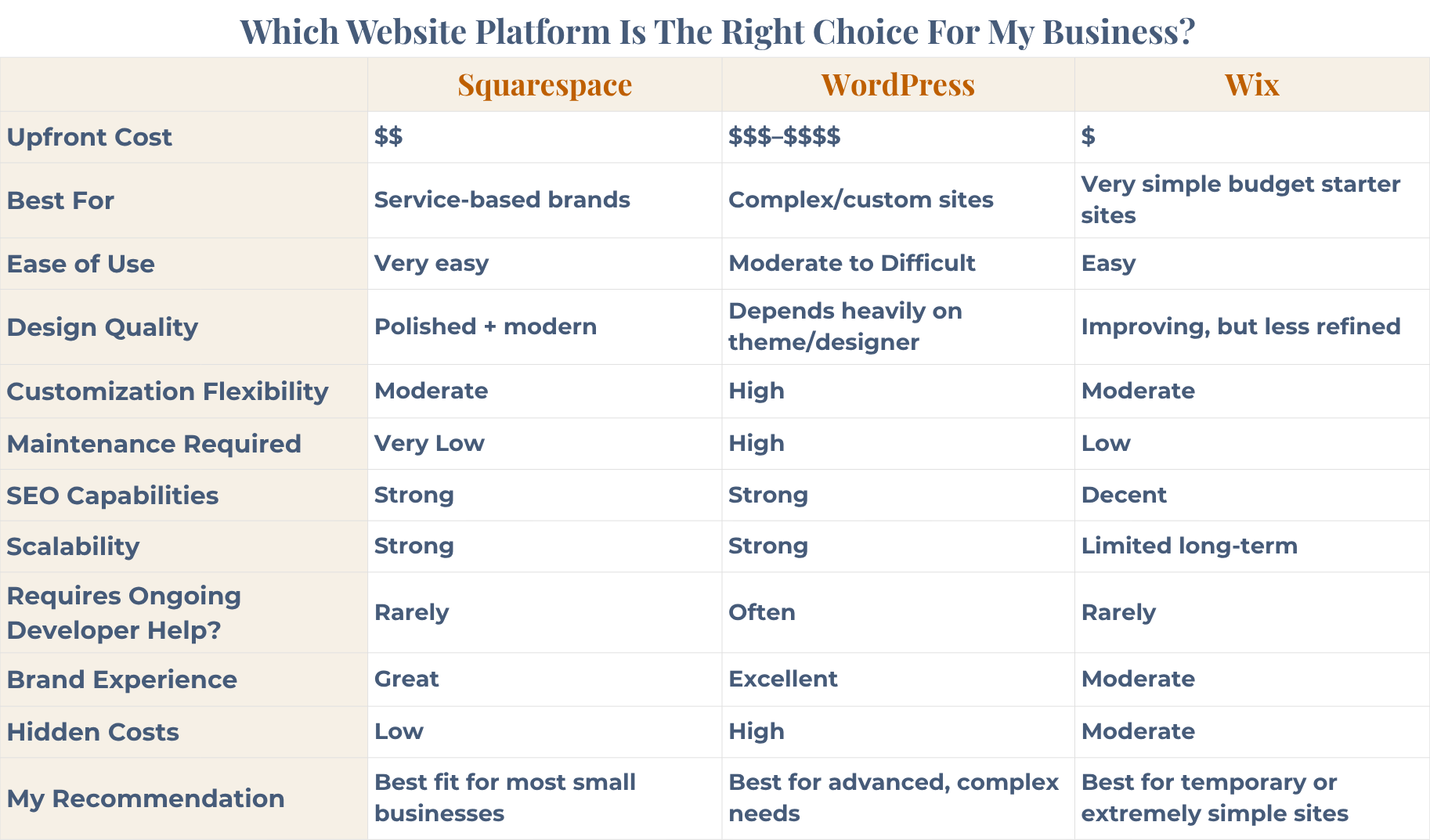
Squarespace vs WordPress vs Wix: Cost Breakdown

Squarespace Website Cost
Squarespace has predictable pricing and is an affordable option for small businesses. Current plans range from about $16–$99 per month when billed annually, depending on features, plus your domain and any add-ons.
If you hire a designer for a professional 10-page Squarespace website, the investment often lands around $5,000–$12,000+, depending on strategy, design customization, copywriting, and functionality.
I love Squarespace for service-based businesses because it gives entrepreneurs a polished, strategic website without creating a long-term dependency on plugins, developers, or constant maintenance. The platform quietly handles the backend while your business keeps moving.
WordPress Website Cost
WordPress’s subscriptions seem cheap, but the ecosystem around it rarely is. Basic WordPress plans start around $4–$45 per month when billed annually, while self-hosted WordPress also requires hosting, domain fees, themes, plugins, security, and maintenance.
For a professionally built 10-page WordPress site, costs often range from $7,500–$20,000+, especially when custom development, premium plugins, and ongoing support enter the picture.
For businesses comparing Squarespace vs. WordPress, WordPress makes sense if you require that advanced functionality. But for most small businesses, it’s more website than you realistically need.
Wix Website Cost
Wix usually carries the lowest barrier to entry upfront. Its paid plans currently range from about $17–$159 per month when billed annually, depending on features and business needs.
A DIY Wix site only costs a few hundred dollars to a couple thousand upfront, while a professionally designed 10-page Wix site often falls around $2,500–$7,500+, depending on customization, copy, and functionality.
Wix works fine for simple or temporary websites, especially if budget is the biggest concern. But as businesses grow, Wix struggles to grow with them. Design flexibility tightens. Scalability gets clunky. Eventually, the site feels more patchwork than polished.
DIY vs Hiring a Website Designer
DIY and professional design both have a place, but the right choice depends on whether your business needs a basic online presence or a strategic website built to support growth.
What DIYing Your Website Really Costs
DIY websites save money upfront, but they cost time, energy, and often confidence.
I’ve seen business owners spend six months wrestling with templates, tweaking layouts, rewriting copy, and trying to duct tape their brand together page by page. Meanwhile, the website sits half-finished like a digital construction zone.
That doesn’t mean DIY is wrong. Sometimes it’s exactly the right starting point, but it’s important to factor in the hidden cost of delayed launches, inconsistent branding, and the sheer mental bandwidth that building your own website demands.
Hiring a Website Designer
Hiring a professional changes the conversation from “How do I make this work?” to “How do we build something strategic?”
A designer brings user experience thinking, brand alignment, strategic structure, visual consistency, polish, and a professional perspective on how your website should guide people toward action.
A strong one helps your website come together faster, feel clearer from the start, and draw your audience in with intention. Instead of guessing your way through the build, you get a polished site designed to support trust, and ultimately, conversions.
3 Factors That Increase Website Pricing
Website pricing rises when the site needs to do more than just look good.
#1: Copywriting
Copywriting impacts pricing because messaging shapes everything. Clear copy guides people through your site, sharpens brand clarity, supports SEO, and helps visitors understand why they should choose you. Strong websites need strong words.
And no, AI can’t do this for you. At least not yet. Your website needs a human voice, nuance, and authenticity behind the words, or you risk ending up with copy that sounds artificial to humans and Google alike.
#2: Custom Design
Templates lower costs. Customization raises them.
The more tailored your website becomes to your brand, audience, and goals, the more strategic thinking and design work gets layered into the project. That’s where websites stop feeling generic and start feeling intentional.
#3: Functionality
Booking systems, e-commerce, memberships, advanced forms, custom integrations, gated content, and automation all increase complexity. Every additional feature adds planning, testing, setup, troubleshooting, and refinement behind the scenes.
Hidden Website Costs Most Businesses Miss
The hidden costs of choosing the cheapest website option show up later through rebuilds, platform switches, inconsistent branding, and missed leads.
Cheap Websites Often Get Rebuilt
A cheap website often turns expensive later. Businesses frequently end up rebuilding websites that feel inconsistent or disconnected from their brand. That second round of work usually costs more than doing it strategically from the beginning.
Switching Platforms Gets Messy Fast
Switching platforms sounds simple until you’re knee-deep in broken formatting, lost SEO structure, migrated blogs, missing images, and design inconsistencies. Website moves create friction fast.
Weak Websites Quietly Lose You Leads
This one hurts the most because it’s invisible. A website that looks “fine” but fails to build trust, clarify your value, or guide visitors toward action costs your business real leads. And every missed inquiry is money your website didn’t help you earn.
Which Website Platform Is Worth It?
The best platform investment depends on how much you want your website to contribute to your business’s actual goals.
Why Squarespace Works for Small Businesses
Squarespace shines for service-based businesses wanting a polished website without the backend chaos.
It balances design, usability, flexibility, simplicity, and scalability seamlessly. That combination makes it one of the best long-term investments for every small business that needs a strategic website without turning into part-time web developers.
When WordPress Is Worth It
WordPress works best for businesses needing advanced functionality, custom development, large-scale content systems, and highly specialized integrations. If your business truly requires that infrastructure, WordPress earns its reputation.
When Wix Makes Sense
Wix works best for very small, temporary, or extremely budget-conscious websites. But for growing businesses prioritizing brand perception and long-term flexibility, it’s a short-term solution rather than a lasting one.
Is a 10-Page Website Worth the Investment?
Yes, a well-built 10-page website is absolutely worth the investment when it’s built strategically. A strong website shapes first impressions, builds credibility, supports SEO, strengthens your brand, and clearly guides users toward action.
Your website should be so much more than a digital brochure. It should work around the clock to move high-quality leads from “They’re a possible choice” to “They’re the only choice.”
Average Cost of a 10-Page Website: Frequently Asked Questions
How much does it cost to build a website in 2026?
A professionally built website typically costs anywhere from $5,000 to $12,000+, depending on platform, strategy, page count, copywriting, customization, and functionality.
Do you still need a website in 2026?
Yes. Your website is still your digital home base, building trust, clarifying your value, supporting SEO, and helping the right people choose you.
How much does it cost to create a website?
DIY websites typically cost a few hundred to $2,000 upfront, while professionally designed websites often start around $5,000+. The real cost depends on what your website needs to do for your business.
Can I run a website free of cost?
Yes, but if you want a polished, professional website, it’s worth investing a bit of money. Free options usually come with limitations, weak branding, or missing features your business will eventually need.
Build a Strategic Website With Burtch Designs

If you’re ready for a polished, on-brand website that works hard for your business, I’m here to make it happen. I build strategic Squarespace websites that help small businesses attract the right audience and grow with confidence. Schedule a call today.
